Bunny and Poppies: A Designer's Review for Small Business Merch
As an embroidery designer who has spent years digitizing and reviewing files for commercial use, I approach every new machine embroidery design with a critical eye. It is not just about whether a file looks cute on a screen; it is about how that digital embroidery file translates into a tangible asset for a brand. Today, I am reviewing Bunny and Poppies, a design categorized under Animals and Embroidery, specifically to evaluate its potential for small business merchandise, branded patches, and custom apparel.
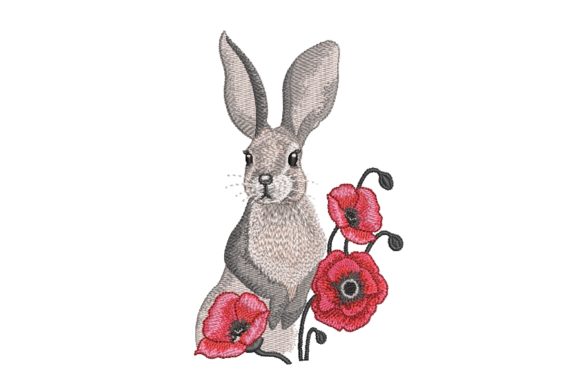
The first impression of Bunny and Poppies is one of approachable charm. Based on the product description, which promises to add "a ton of cuteness" to fabrics like pillows, towels, and apparel, this design leans heavily into a playful, handmade aesthetic. For businesses in the boutique, bakery, florist, or pet industry sectors, this visual personality is gold. It signals warmth and creativity, moving away from the sterile corporate look toward something that feels artisanal and inviting. However, for a professional embroiderer, "cute" must also mean "stitchable." The key question is whether this design holds up under the scrutiny of commercial production standards.
Real-World Application for Brand Identity
When considering Bunny and Poppies for small business merch, the applications are vast but require strategic placement. Imagine a local café wanting to upgrade their staff uniforms. A standard black apron can feel generic, but adding this design as a chest accent or sleeve detail instantly creates a signature look. It transforms a basic uniform into a piece of custom apparel that customers notice and remember. Similarly, for a florist or a creative studio, this design works exceptionally well on tote bags. A tote bag design featuring a bunny and floral elements aligns perfectly with the natural, organic vibe these businesses often cultivate.
The potential for creating an embroidered patch is particularly strong here. Patches are a trending element in modern branding because they offer versatility. You can stitch Bunny and Poppies onto a twill backing, merrow the edges, and apply it to caps, jackets, or even product packaging accents. This allows a business to maintain visual consistency across different materials without committing to direct embroidery on every single item. For Etsy sellers and crafters, offering this as a pre-made patch adds a high-value item to their shop inventory with minimal overhead.
In terms of brand identity, this design fosters trust through its detailed, handmade presentation. In an era of mass production, consumers value items that show human effort. Using Bunny and Poppies on customer gifts or event merch tells your audience that you care about the details. It elevates the perceived value of the finished product, making a simple towel or tablecloth feel like a premium gift rather than a commodity.
Technical Considerations for Commercial Embroidery
While the aesthetic appeal is clear, we must discuss the technical execution. The product description mentions suitability for bedsheets, table cloths, and apparel, which implies a range of fabric types. However, when deploying this for commercial embroidery, caution is required regarding stitch density and fabric texture. If the design features dense satin stitches for the bunny's fur or the poppy petals, it may cause puckering on lightweight fabrics like thin cotton tablecloths or delicate apparel. Always test the file on a scrap piece of your actual production fabric first.
For those considering cap embroidery, the curvature of the front panel presents a challenge. Designs with large, solid fill areas can distort on curved surfaces. If Bunny and Poppies has significant fill density, it might be better suited for the side panels of a cap or applied as a patch rather than stitched directly onto the front. Additionally, if the design includes fine details or tiny lettering (though none is explicitly mentioned in the description), these elements may lose definition at smaller sizes. If you intend to use this as a small logo mark on a collar or cuff, you must verify that the digitizer has optimized the file for small-scale reproduction.
Color management is another critical factor. The vibrancy of the poppies against the bunny figure relies on strong thread colors. When stitching on dark uniforms, you may need to adjust the underlay or add a backing layer to prevent the garment color from bleeding through and dulling the design's brightness. Conversely, on white or light fabrics, ensure the thread contrast is sufficient to make the outlines pop. A printable mockup is essential here; do not rely solely on the digital preview. Create a physical sample to see how the threads interact with the specific material you are using.
Designer Notes for Production Success
To ensure Bunny and Poppies performs flawlessly in your shop, follow these practical steps before running a full production batch:
- Test in Black and White: Before committing to colorful threads, stitch a sample using a single color or grayscale. This helps you identify any gaps in spacing or issues with stitch direction that color might hide.
- Verify Hoop Size: The description does not specify the exact dimensions or required hoop size. Check the file properties immediately upon download to ensure it fits your machine's capabilities, especially if you are working with smaller hoops for hat frames or sleeve cuffs.
- Stabilizer Selection: Given the potential for varied fabrics (from towels to apparel), choose your stabilizer wisely. Cut-away stabilizer is generally recommended for stretchy apparel to prevent distortion over time, while tear-away might suffice for stable woven fabrics like table linens.
- Review Design Assets: Compare this file beside your other design assets. Does the style of Bunny and Poppies match your existing brand library? Visual consistency is key to professional branding.
- Confirm Licensing: Perhaps most importantly, review the license terms. The description highlights its use for various home and apparel items, but for small business resale or mass production, you must confirm that the digital embroidery file includes a commercial license. Never assume a file is free for unlimited commercial use without explicit documentation.
Ultimately, Bunny and Poppies represents a versatile tool for the modern embroidery entrepreneur. It bridges the gap between whimsical decoration and functional branding. Whether used to adorn a baker's apron, embellish a boutique's tote bag, or serve as a charming patch for a pet brand, its success lies in thoughtful application. By respecting the technical limits of the machine and understanding the nuances of fabric interaction, you can leverage this adorable design to create products that not only look good but also strengthen your customer's connection to your brand.
Remember, the difference between a hobbyist project and a professional product often comes down to these small details. Take the time to test, adjust, and perfect your setup. With the right approach, Bunny and Poppies can become a staple in your catalog of high-quality, branded merchandise.