Ant Eating Watermelon Single Stitch Review
As an embroidery designer who spends hours digitizing and testing files for commercial use, I am always on the lookout for designs that balance whimsical charm with technical reliability. Recently, I came across the Ant Eating Watermelon Single Stitch on Creative Fabrica, a product categorized under Bugs and Embroidery that immediately caught my eye for its playful narrative. In the world of machine embroidery, line art can be tricky; it often lacks the visual weight needed for certain fabrics or appears too sparse without proper stabilization. However, after reviewing the details and visualizing this design in real-world applications, I believe it holds significant potential for crafters, Etsy sellers, and boutique owners looking to add a touch of summer fun to their inventory.
First Impressions and Visual Mood
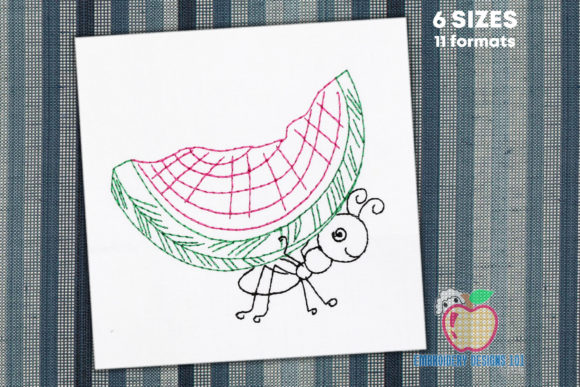
The first thing that strikes me about the Ant Eating Watermelon Single Stitch is its simplicity. The description highlights that this is a running line art design, which suggests a minimalist aesthetic perfect for modern handmade products. Unlike complex fill stitch or satin stitch designs that can sometimes look heavy or dated, this running stitch approach offers a delicate, hand-drawn feel. The concept of an ant enjoying a slice of watermelon evokes a sense of whimsy and nostalgia, making it an excellent candidate for nursery decor, children's apparel, or seasonal kitchen textiles.
Visually, the design relies on clean lines rather than dense coverage. This "stitching personality" is crucial because it means the finished product will feel lightweight and breathable, a key factor when working on custom apparel like baby onesies or lightweight tote bags. The decorative appeal lies in its storytelling capability; it is not just a bug or a fruit, but a scene that invites a smile. For creative entrepreneurs, this kind of emotional connection is what turns a browser into a buyer.
Performance in Real Embroidery Projects
When considering how the Ant Eating Watermelon Single Stitch performs in actual production, versatility is its strongest asset. Because it utilizes a running stitch technique, it is inherently adaptable to various substrates. I can easily envision this design elevating a plain canvas tote bag into a charming market accessory. The open nature of the line work ensures that the fabric texture remains visible, which is a popular trend in contemporary handmade goods.
For those focusing on custom apparel, this design would look delightful on a sweatshirt embroidery project, particularly on the cuff or near the hem where large, dense logos might feel out of place. It is also an ideal choice for embroidered patches. Since the design does not rely on heavy saturation, it can be stitched onto twill or felt backing without excessive puckering, provided the correct stabilizer is used. Furthermore, for shop owners creating printable mockups to list on Etsy before physically producing items, the clean lines of this digital embroidery file translate beautifully into high-resolution images, helping to drive customer engagement.
The category of Bugs often brings to mind realistic or scary imagery, but this design leans firmly into the cute and approachable side of the spectrum. This makes it safe and appealing for a wide demographic, from toddlers to adults who appreciate quirky kitchen towels or aprons. As a commercial embroidery product, its broad appeal reduces the risk of holding unsold inventory.
Practical Considerations for Production
While the design is promising, practical execution requires attention to detail. Running stitch designs, by their nature, have lower stitch density compared to fill stitches. This is generally a positive trait, but it demands careful consideration of the fabric choice. On textured fabric, such as linen or waffle weave, the lines might get lost or appear uneven if the thread color does not provide enough contrast. I strongly advise testing on scrap fabric first to ensure the lines pop against the background.
Stretchy fabric presents another challenge. If you plan to use this on a t-shirt or a cap, the lack of dense underlay in a simple running stitch design means the fabric's movement could distort the image over time. Using a cut-away stabilizer is essential here to maintain the integrity of the ant and watermelon shapes, especially on products that need frequent washing. For curved cap surfaces, the small hoop sizes typically required for this scale of design are beneficial, but one must ensure the design is centered perfectly to avoid wrapping issues.
Dark fabric usage also requires strategy. Since this is a line art piece, using a light thread on a dark garment can look striking, but you must ensure the thread quality is high to prevent breakage during the long runs of the running stitch. Conversely, stitching dark thread on light fabric is classic, but any tension issues will be immediately visible. Always inspect small details after stitching; a skipped stitch in a continuous line is much more noticeable than in a filled area.
Enhancing Product Value and Brand Consistency
Incorporating the Ant Eating Watermelon Single Stitch into your catalog can significantly affect product value. Handmade presentation is everything in the current market, and a well-executed, whimsical design signals care and creativity. For brand consistency, if your shop focuses on nature-inspired or summer-themed items, this design fits seamlessly alongside floral motifs or other organic elements. It enhances giftability, making items like pillow covers or baby blankets feel personalized and thoughtful without the need for expensive customization.
From a marketing perspective, the visual appeal of this design aids in product photography. The clear lines create strong shadows and definition in photos, which helps potential customers visualize the texture and quality of the finished product. This clarity can boost customer engagement on social media platforms where visual storytelling drives sales. For digital product sellers, offering this as part of a bundle of summer-themed design assets could increase the perceived value of your shop.
Final Verdict and Technical Notes
Before committing to a large run of commercial embroidery products featuring the Ant Eating Watermelon Single Stitch, there are several technical steps every professional should take. First, confirm the file details and licensing terms on the Creative Fabrica product page. While the description mentions it comes in multiple sizes, it does not explicitly list specific hoop sizes, stitch counts, or compatible machine formats. It is vital to check these specifics to ensure compatibility with your equipment.
Additionally, review the stitch density settings in your embroidery software if you have the ability to edit the file. You may want to adjust the pull compensation slightly depending on your thread brands. Always compare light and dark fabric mockups to decide on the best thread colors for your specific inventory. Remember, the goal is to create a durable, attractive finished product that stands up to the rigors of daily use.
In conclusion, the Ant Eating Watermelon Single Stitch is a versatile and charming addition to any embroidery library. Its running line style offers a modern aesthetic that works well across various mediums, from kitchen towels to boutique merchandise. With proper stabilization and thoughtful fabric selection, this design can help small business owners and crafters create high-quality, engaging products that resonate with customers looking for unique, handmade treasures.